

Hot surfaces are not just a safety concern in a test cell. They can become a schedule problem when insulation coverage changes from one maintenance event to the next. If the solution depends on perfect reinstall habits, the test cell ends up living with inconsistent results.
Inconsistent coverage is common when insulation must come off for access. If reinstall is not repeatable, hot zones move and teams lose time chasing problems that should have been controlled from the start.
Test cells create a harsh reality for insulation. High heat, vibration, and frequent maintenance access expose weak points fast. When insulation drifts, tears, or returns from service fitting differently, surface temperatures can rise in unexpected places and force workarounds.
A sustainable approach is one that holds up through repeated cycles and is designed for removal and reinstall where access is required.
At Caterpillar’s Tech Center in Peoria, IL, test cell engineers regularly remove and reinstall exhaust assemblies as part of ongoing work. Their challenge wasn’t just heat, it was the repeatability of insulation coverage after service.
They needed an insulation approach that supports:
HTI installed a high-temperature insulation system on the exhaust run (vertical section and elbow). The install was built around real test cell constraints, tight routing, hardware interfaces, and the need to remove and reinstall components without turning insulation into a rework project.
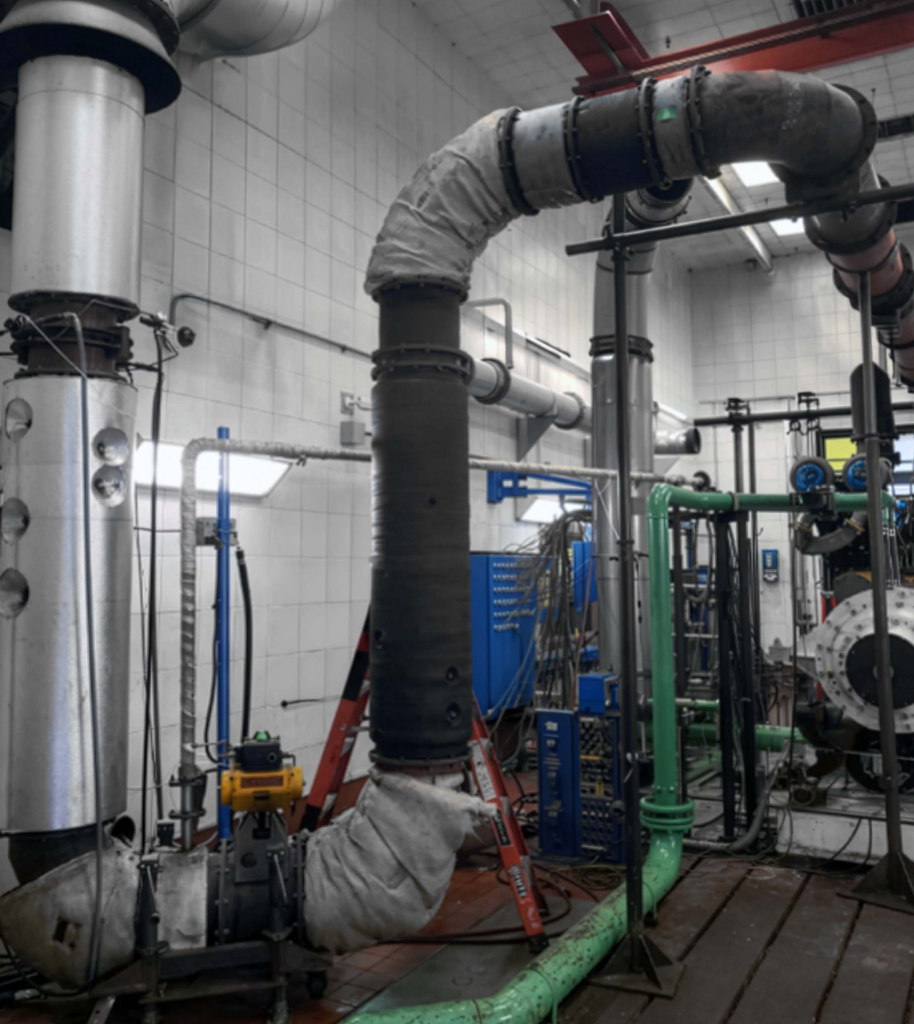
HTI focuses on a permanent insulation approach designed around your constraints. We start with what is available and build toward repeatable coverage.
When thermal mapping proof is available, we share what was measured and under what conditions. We do not generalize results into universal performance claims. If you have a target surface temperature requirement or known exposure points, share them so we can review the right scope.
If you tell us what gets accessed during service and what cannot be disturbed during a test cycle, we will design around that.
If your test cell is fighting hot surfaces, inconsistent insulation reinstall, or repeated rework after maintenance, a permanent insulation approach can help. Send your component list and constraints and HTI will recommend a repeatable solution designed for serviceability in test cell environments.